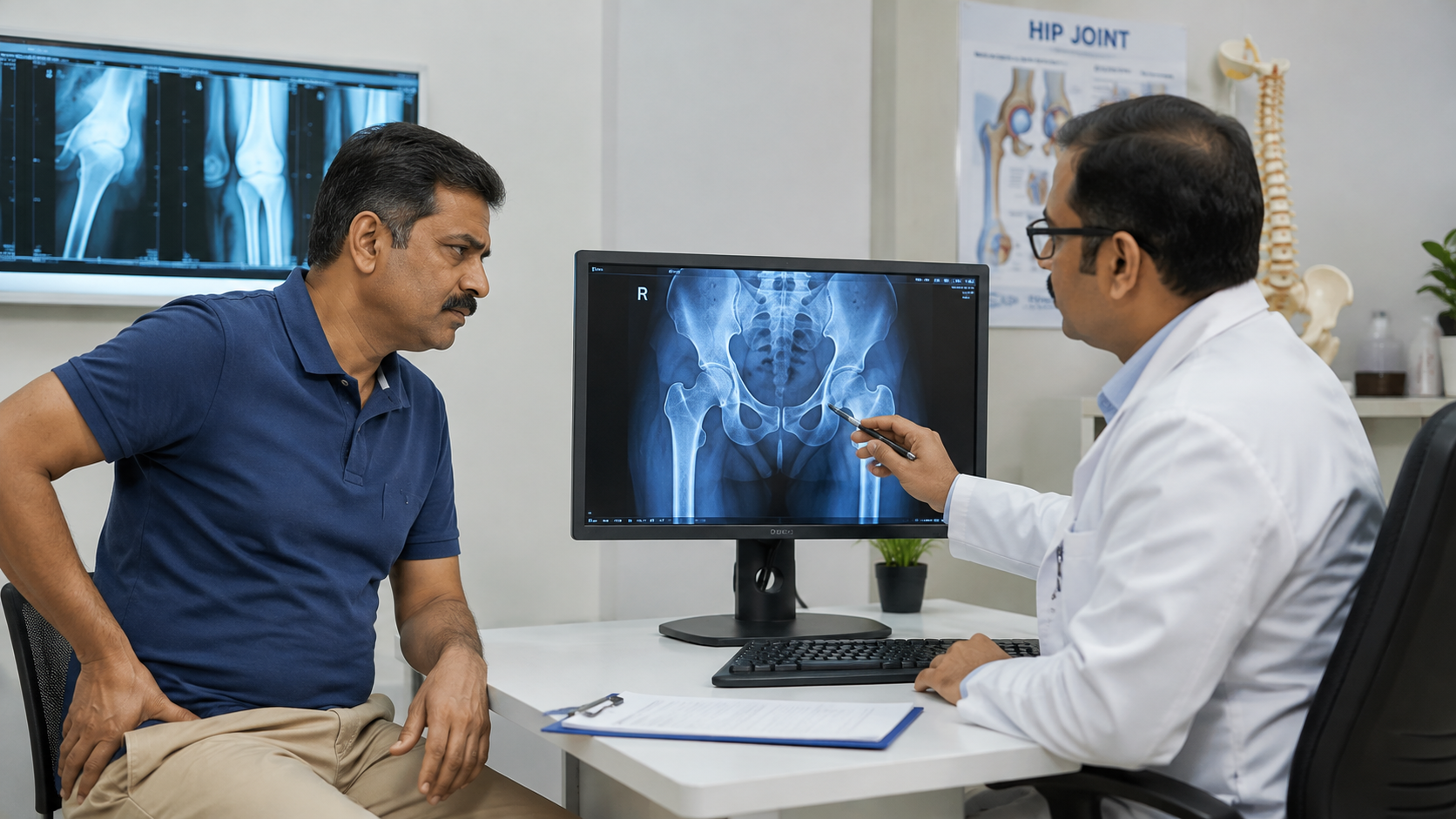
Severe hip pain can make everyday activities such as walking, climbing stairs, getting out of a chair, or wearing shoes difficult. When medication, physiotherapy, activity modification, and walking support no longer provide enough relief; surgery may be considered.
Total hip replacement and hip resurfacing are two surgical options for advanced hip arthritis. Although both procedures aim to reduce pain and improve mobility, they differ in how much natural bone is preserved, the type of implant used, and the patients for whom they are suitable.
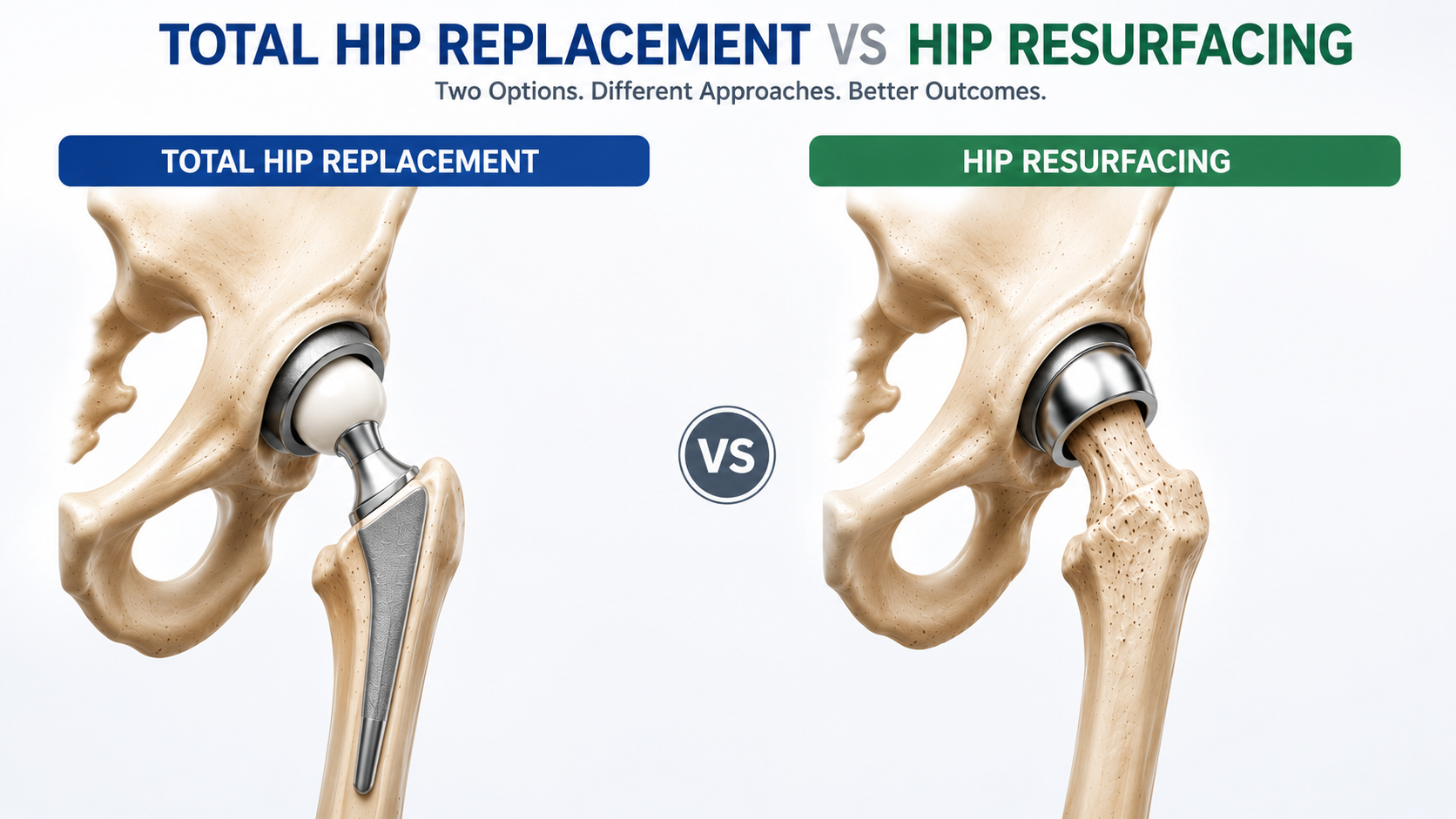
Total hip replacement, also known as total hip arthroplasty, replaces the damaged ball and socket of the hip joint with artificial components.
During the procedure, the damaged femoral head at the top of the thighbone is removed. A metal stem is inserted into the femur, and a metal or ceramic ball is attached to it. The damaged hip socket is also replaced with an artificial socket, usually containing a plastic, ceramic, or other suitable bearing surface.
The procedure is commonly recommended for patients with severe hip pain, stiffness, and loss of mobility caused by osteoarthritis, rheumatoid arthritis, post-traumatic arthritis, osteonecrosis, or certain fractures.
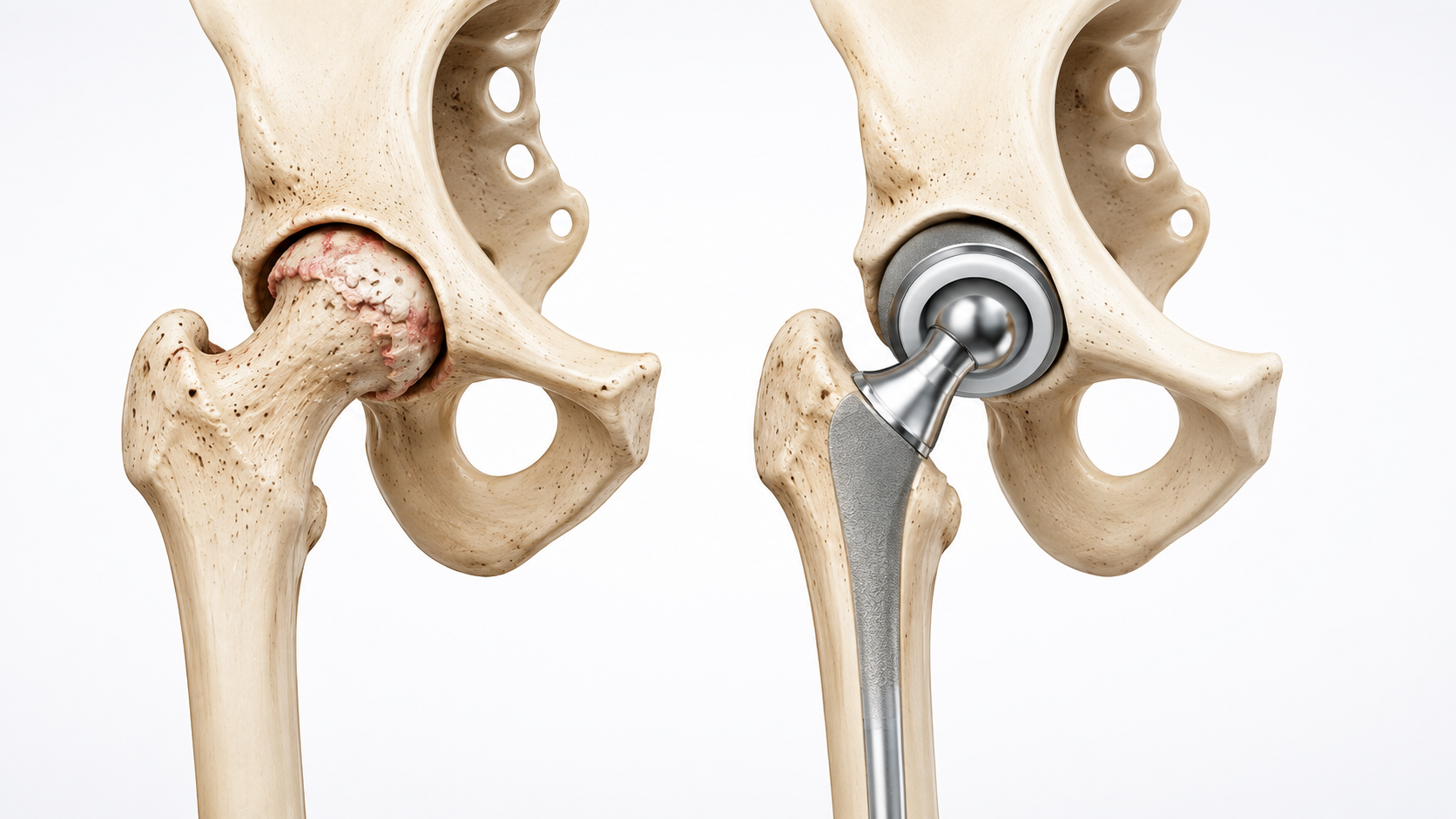
Hip resurfacing is another type of hip replacement procedure. However, instead of removing the entire femoral head, the surgeon trims it and places a smooth metal cap over it.
The damaged cartilage and bone inside the hip socket are removed and replaced with a metal shell. Because the femoral head and neck are preserved, hip resurfacing removes less bone from the upper thighbone than total hip replacement.
Hip resurfacing is not suitable for every patient. It is generally considered carefully selected for people with advanced hip arthritis, strong bones, and a lifestyle that may place greater physical demands on the joint.
| Feature | Total Hip Replacement | Hip Resurfacing |
|---|---|---|
| Femoral head | Removed and replaced | Trimmed and capped |
| Bone preservation | Less natural femoral bone preserved | More femoral bone preserved |
| Implant design | Stem, ball, socket, and liner | Metal cap and metal socket |
| Suitable patients | Broad range of adults | Carefully selected younger patients |
| Bone strength required | Assessed individually | Strong, healthy bone is essential |
| Femoral neck fracture risk | Femoral neck is removed | Specific risk after resurfacing |
| Metal-ion concern | Depends on implant materials | Important consideration with metal-on-metal resurfacing |
| Revision surgery | Possible if the implant fails | May preserve more bone for later revision |
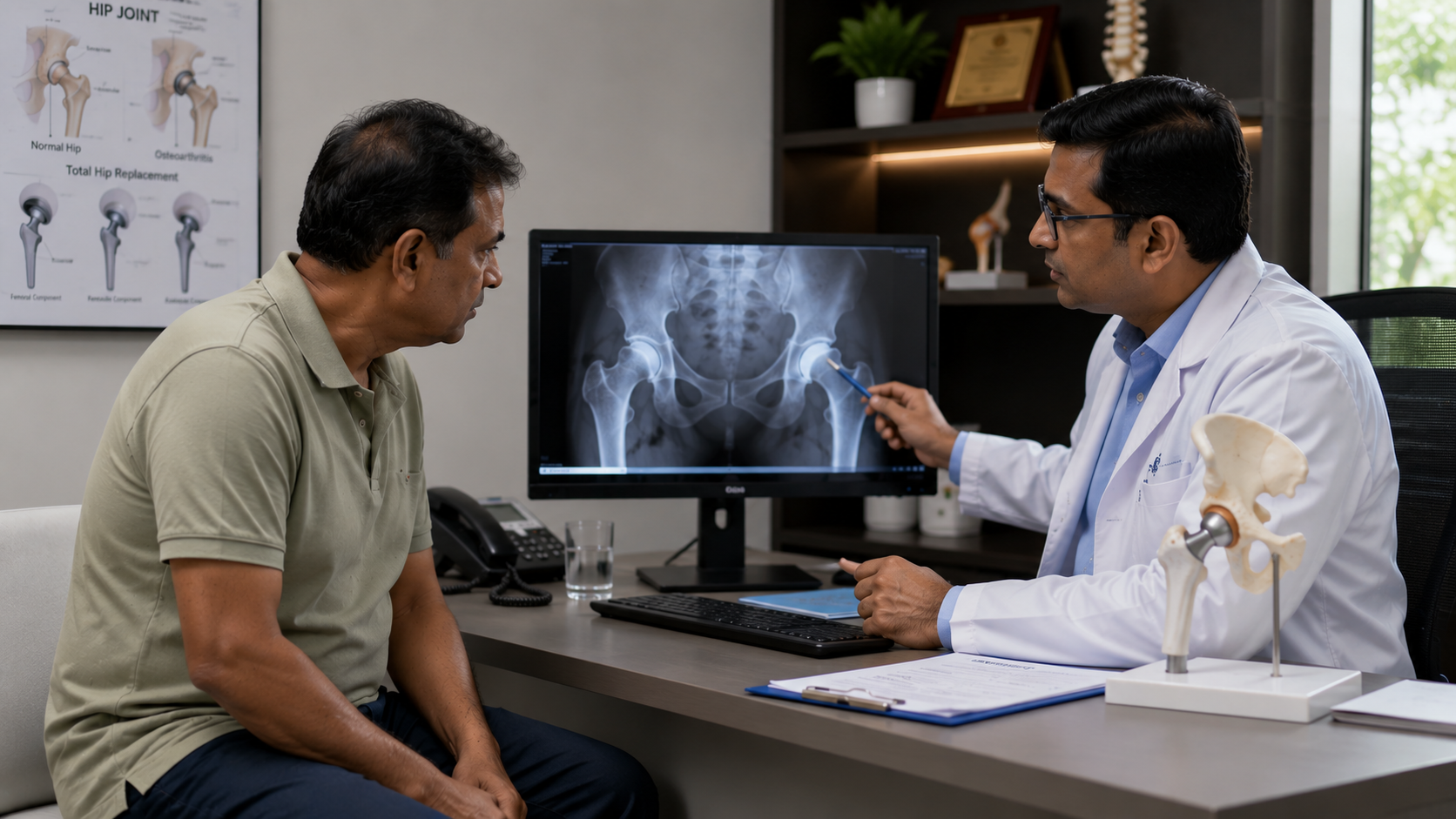
Total hip replacement may be recommended when hip pain and stiffness significantly interfere with daily life, and non-surgical treatments no longer provide adequate relief.
Unlike hip resurfacing, total hip replacement is considered for a broader range of patients. The decision is generally based more on pain, disability, bone condition, overall health, and expected benefit than on age alone.
You may be considered for total hip replacement if you have:

Hip resurfacing is usually considered for a smaller and more carefully selected group of patients. According to the American Academy of Orthopedic Surgeons, the strongest candidates are generally younger than 60, larger-framed, and have strong, healthy bone.
A patient may be considered for hip resurfacing when they:
Older adults, smaller-framed patients, women, and people with weak or damaged bone may have a greater risk of complications such as femoral neck fracture following resurfacing. Suitability must therefore be assessed individually.

Total hip replacement is an established procedure that can provide substantial pain relief and improve the ability to perform daily activities.
Potential benefits include:
After recovery, many patients can return to walking, swimming, cycling, driving, golf, and other low-impact activities. High-impact activities may be restricted to reducing unnecessary implant wear.
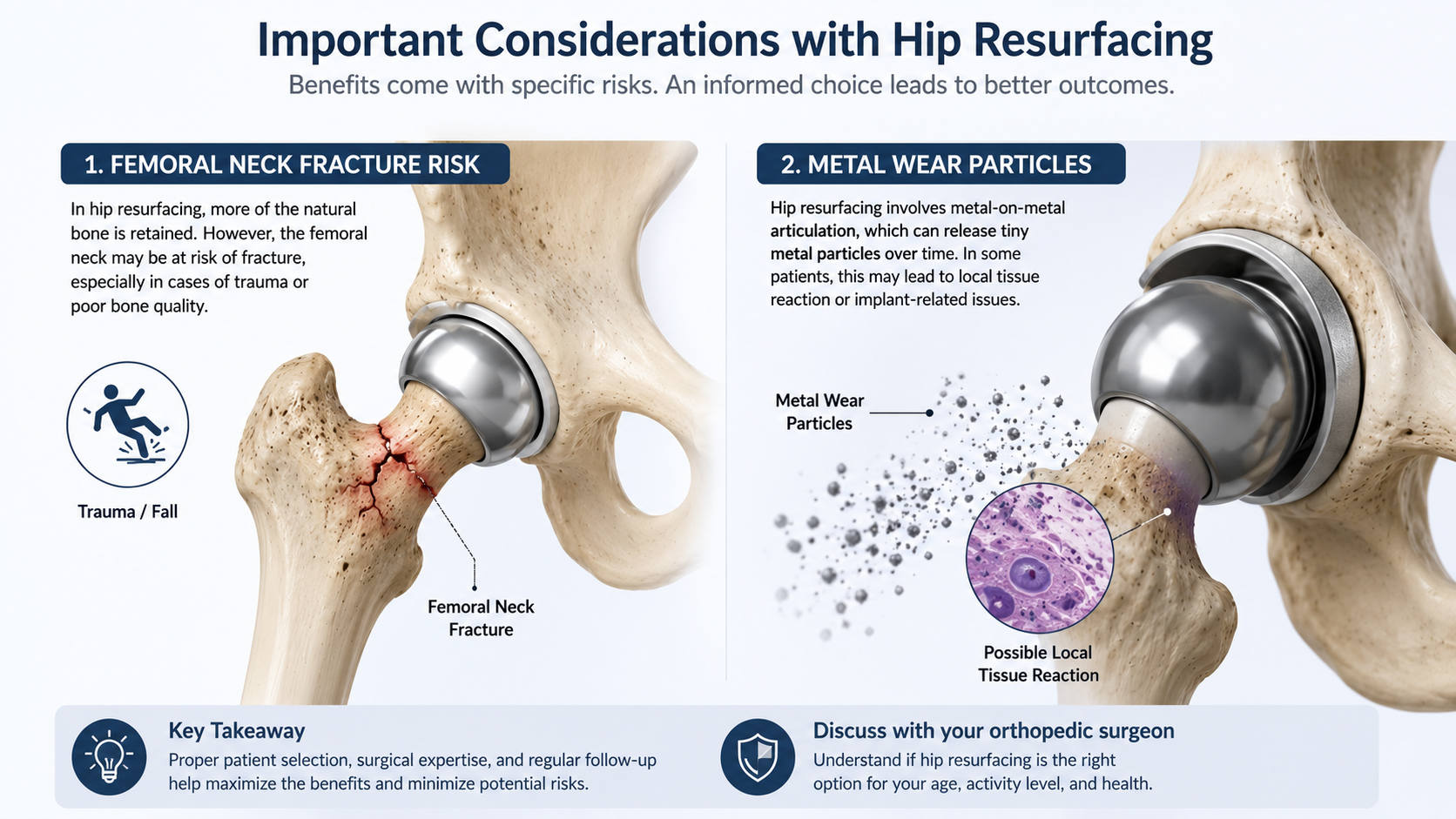
The main feature of hip resurfacing is that it preserves more of the femoral head and neck.
Potential advantages may include:
However, some of these proposed advantages remain debated among orthopedic surgeons, and the benefit depends heavily on patient selection, implant choice, and surgical expertise.
Like any major surgery, total hip replacement carries potential risks. These can include:
Serious complications are uncommon, but individual risk may be affected by age, overall health, weight, smoking, diabetes, bone quality, and other medical conditions.
Hip resurfacing has some risks that differ from those of total hip replacement.
Because the natural femoral neck remains in place, a fracture may occur in this area after resurfacing. If this happens, conversion to total hip replacement is usually required.
Most current hip resurfacing systems use a metal ball moving inside a metal socket. Friction can release small metal particles and ions. In some patients, these may cause inflammation, tissue damage, implant loosening, pain, swelling, or other reactions.
Patients with metal-on-metal resurfacing implants may require ongoing clinical and imaging follow-up. New hip or groin pain, swelling, weakness, unusual sounds, numbness, or changes in walking should be reported to the orthopedic surgeon.

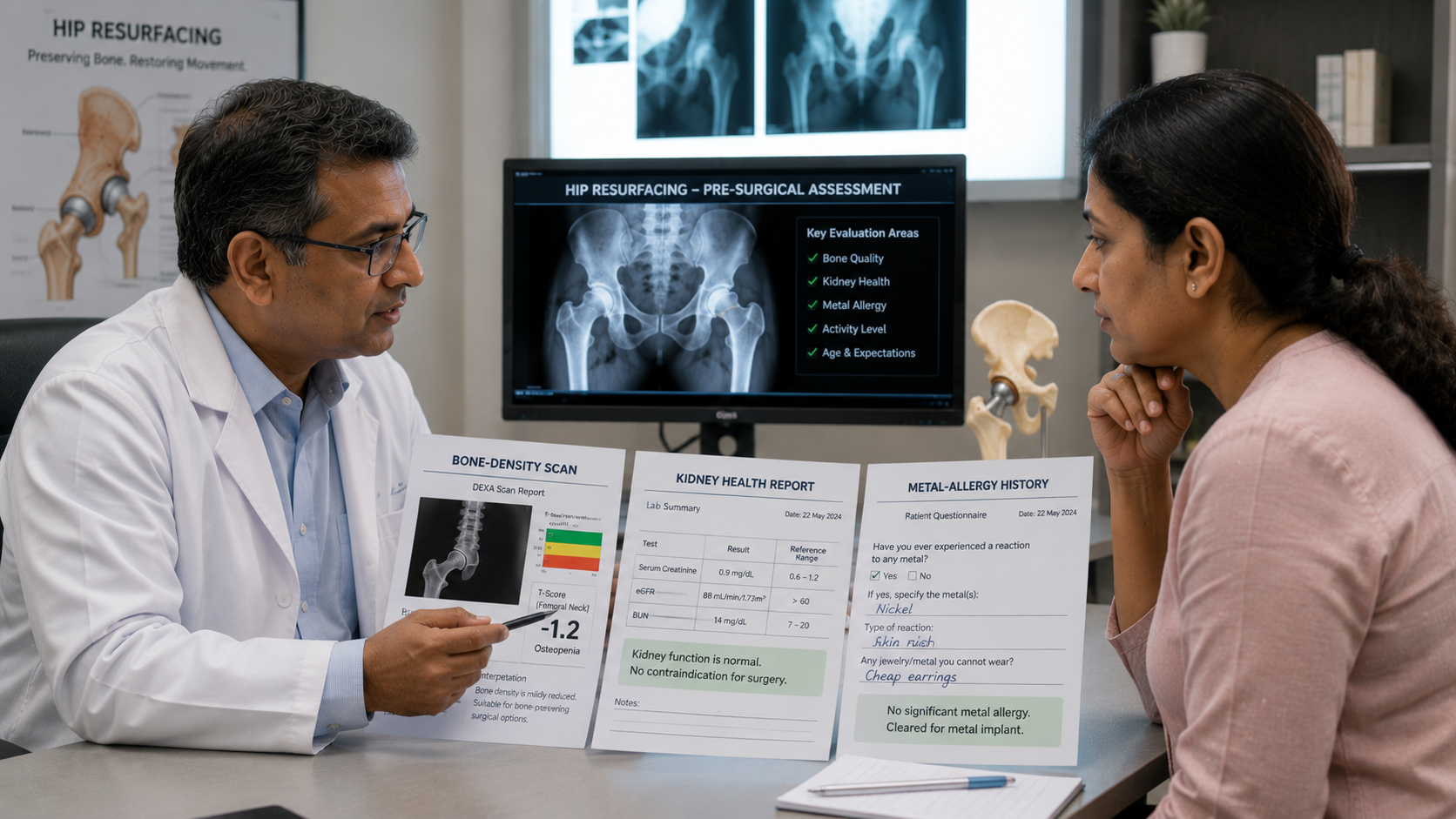
Hip resurfacing may not be appropriate for patients with:
The FDA advises that metal-on-metal hip resurfacing is not intended for everyone and requires careful review of the patient's medical history, bone quality, implant size, and individual risks.
Recovery varies from person to person. Both procedures require wound care, pain management, walking support, physiotherapy, and gradual strengthening.
Although hip resurfacing preserves more bone, it should not automatically be assumed to have a faster recovery. The surgical approach, muscle condition, bone strength, age, overall health, and rehabilitation programmed all influence recovery.
Following total hip replacement, regular exercises and a gradual return to daily activities are important for restoring strength and mobility. Full muscular recovery may continue for several months.
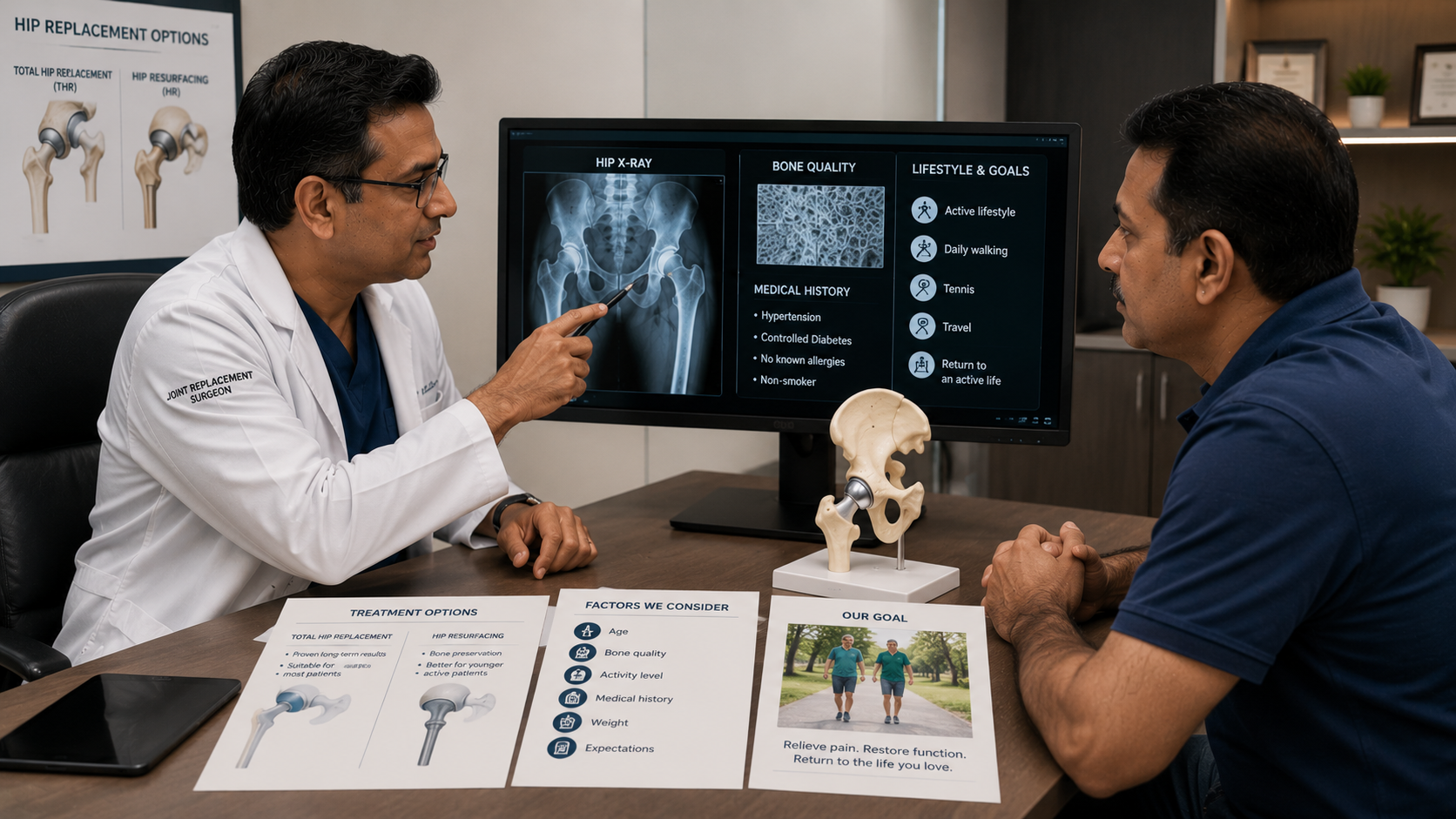
Your orthopedic surgeon will consider several factors before recommending hip replacement or hip resurfacing:
The decision should be based on a complete evaluation that includes your medical history, physical examination, X-rays, and, when necessary, additional imaging.

Neither procedure is universally better for every patient.
Total hip replacement is generally the most widely used option and is suitable for a broader range of adults with severe hip arthritis, pain, and reduced mobility.
Hip resurfacing may be considered for selected younger, larger-framed, active patients with strong bone quality who understand the specific risks associated with femoral neck fracture and metal-on-metal implants.
The safest choice is the procedure that best matches your anatomy, health, activity level, bone strength, and long-term needs.
Hip resurfacing is a type of hip replacement, but it preserves the femoral head instead of removing it completely. The head is reshaped and covered with a metal cap.
It may be an option for selected younger patients with strong bones and suitable anatomy. Age alone does not determine eligibility.
Yes. If the resurfacing implant fails or complications to develop, it may be converted to a total hip replacement. Preserving more femoral bones may be helpful during revision, although revision surgery can still be complex.
Both procedures can reduce pain in properly selected patients. Outcomes depend on diagnosis, surgical technique, implant choice, rehabilitation, and individual health.
Many patients return to walking, swimming, cycling, golf, and other low-impact activities after total hip replacement. Return to demanding or high-impact sports should only occur after discussing the risks with the surgeon.
Implant lifespan varies according to implant type, activity, weight, surgical factors, and individual biology. Hip implants can wear or loosen over time, and some may eventually require revision surgery.
Before choosing a procedure, consider asking:
A clear discussion can help you understand the expected benefits, limitations, and long-term follow-up involved.
Total hip replacement and hip resurfacing can both help relieve severe hip pain and improve mobility, but they are designed for different patient groups.
Total hip replacement remains suitable for a broad range of patients with advanced hip damage. Hip resurfacing is a more selective option, generally considered for younger and larger-framed patients with strong bone quality.
The final decision should be made after a detailed evaluation by an experienced joint replacement surgeon. The goal is not simply to select the newest procedure, but to choose the safest and most appropriate treatment for your hip, health, and lifestyle.
Looking for a reliable Orthopedic Surgeon in Belagavi?
Dr Pavan Alkunte MBBS, D-Ortho, DNB Ortho, FIAS, FIJS
With 14 years of experience, Dr. Pavan Alkunte offers personalized treatment in Orthopedic Sports Medicine, Arthroscopy, Joint Replacement Surgery, and related orthopedic conditions.
Consult Now at Unicare Hospital
Visit: www.unicarehospital.com
Call: 8088 814705
WhatsApp: +91 83131 00119
Address: Shahapur, Belagavi
