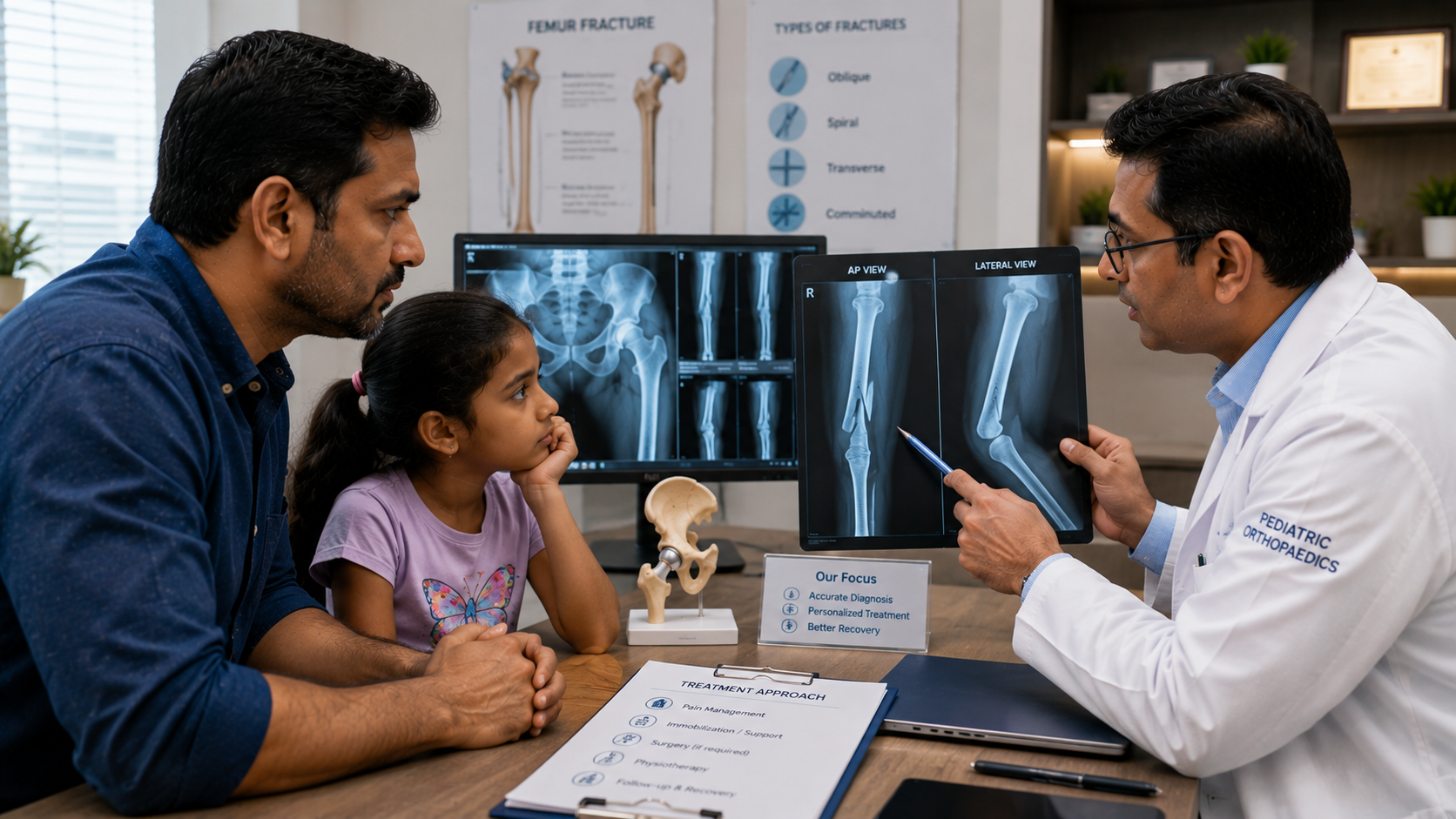
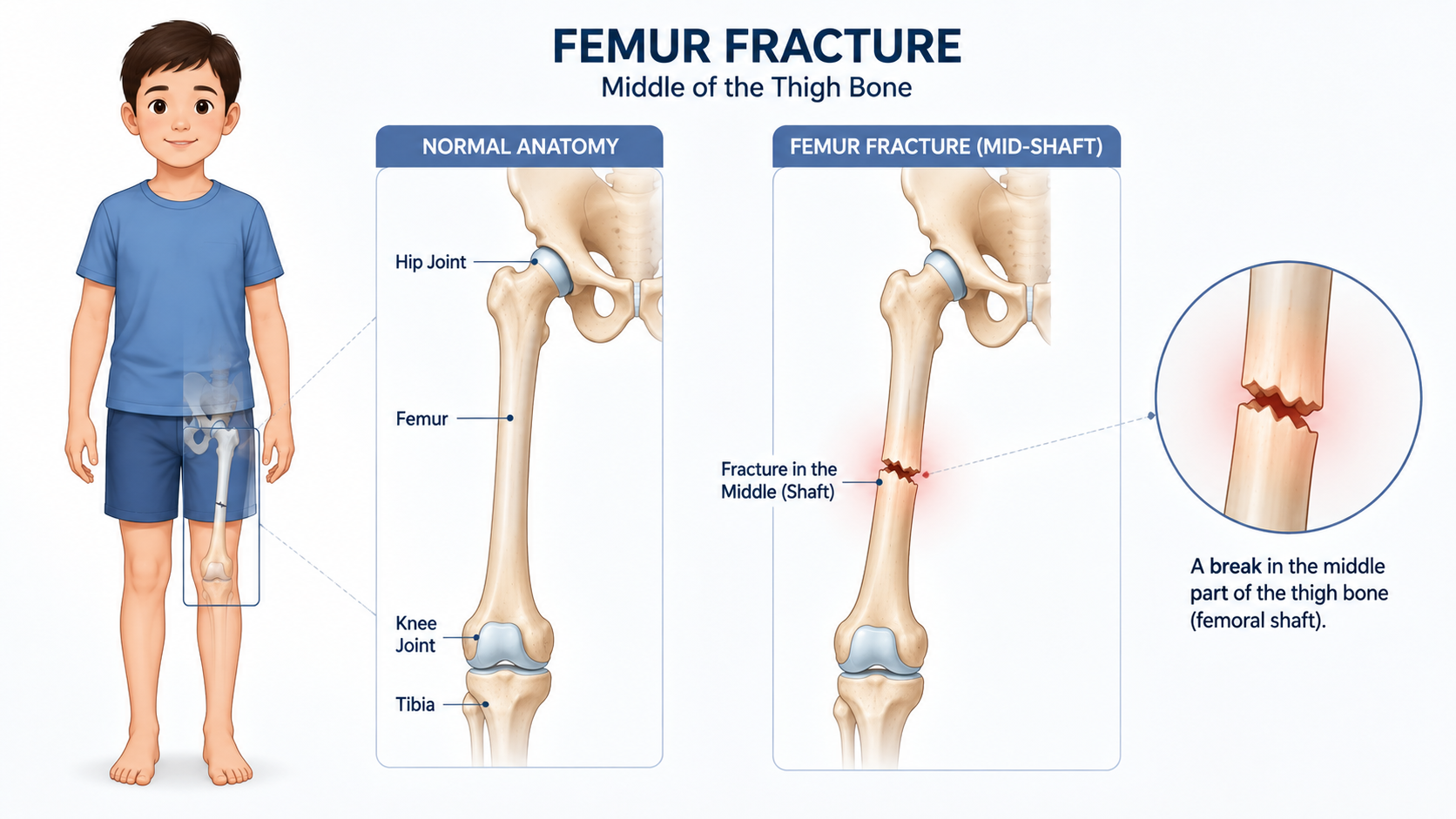
A femur fracture is a break in the thighbone, the longest and strongest bone in the body Although children’s bones generally heal well, a broken femur is a serious injury that requires prompt evaluation by a pediatric orthopedic specialist.
Treatment may involve a hip spica cast or surgery. The right option depends on the child’s age, weight, fracture pattern, bone alignment, and whether there are other injuries.
Understanding both treatment approaches can help parents prepare for recovery and care for their child with greater confidence.
The femur extends from the hip to the knee. A break in the middle portion of this bone is called a femoral shaft fracture.
Because the femur is strong, these fractures are often caused by significant force. Common causes include road accidents, falls from height, sports injuries, playground accidents, and direct blows to the thigh.
In infants or children who are not yet walking, doctors may need to carefully assess how the injury occurred and rule out non-accidental trauma.
A child with a broken femur may have:
A femur fracture requires urgent hospital assessment. Parents should not attempt to straighten their legs or allow the child to walk.
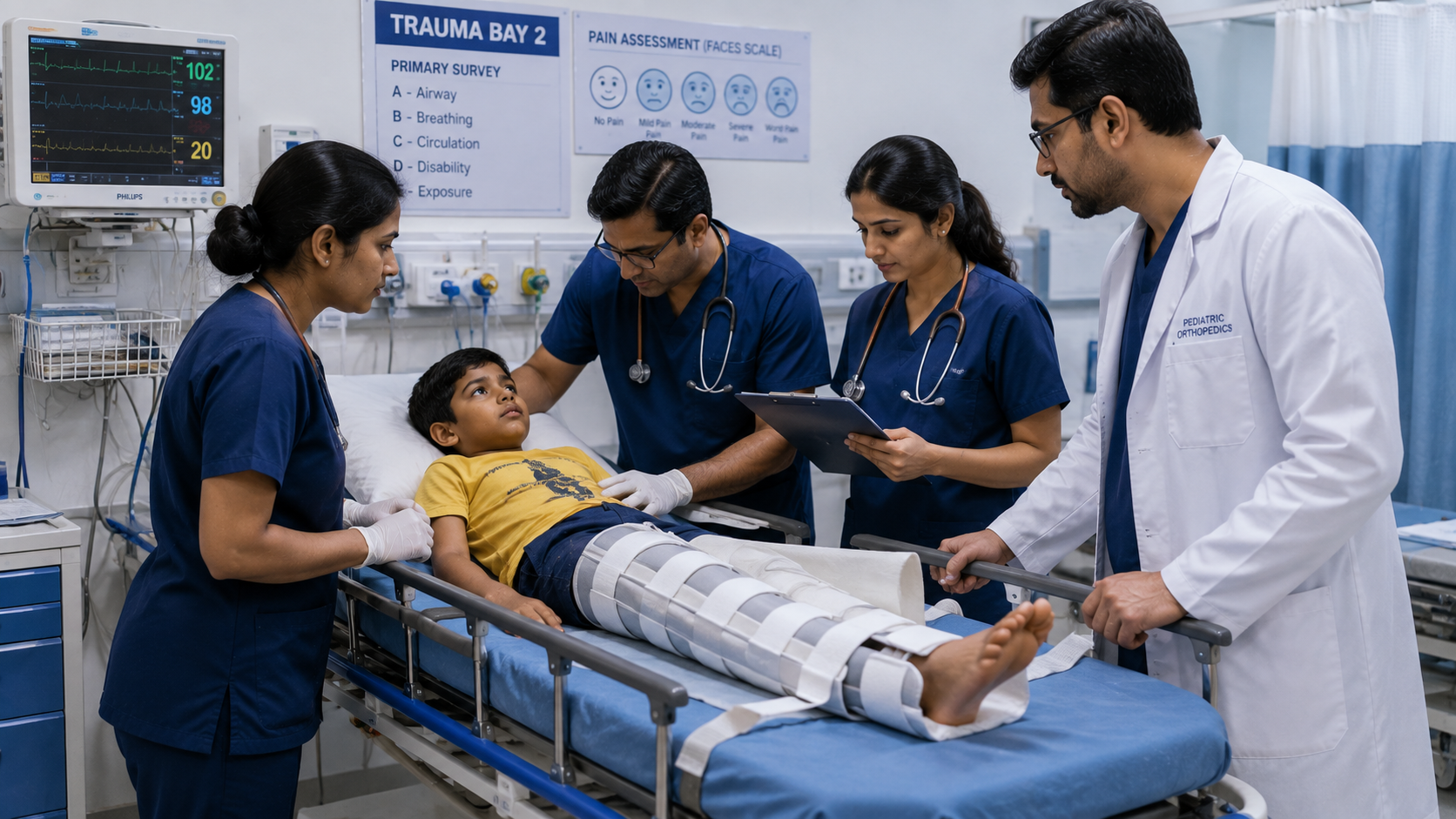
The doctor examines the injured leg and checks the child’s circulation, sensation, skin, and movement. The hip and knee are also assessed because related injuries can occur.
X-rays help identify:
Additional imaging may be required when there are concerns about the hip, knee, blood vessels, or other injuries.
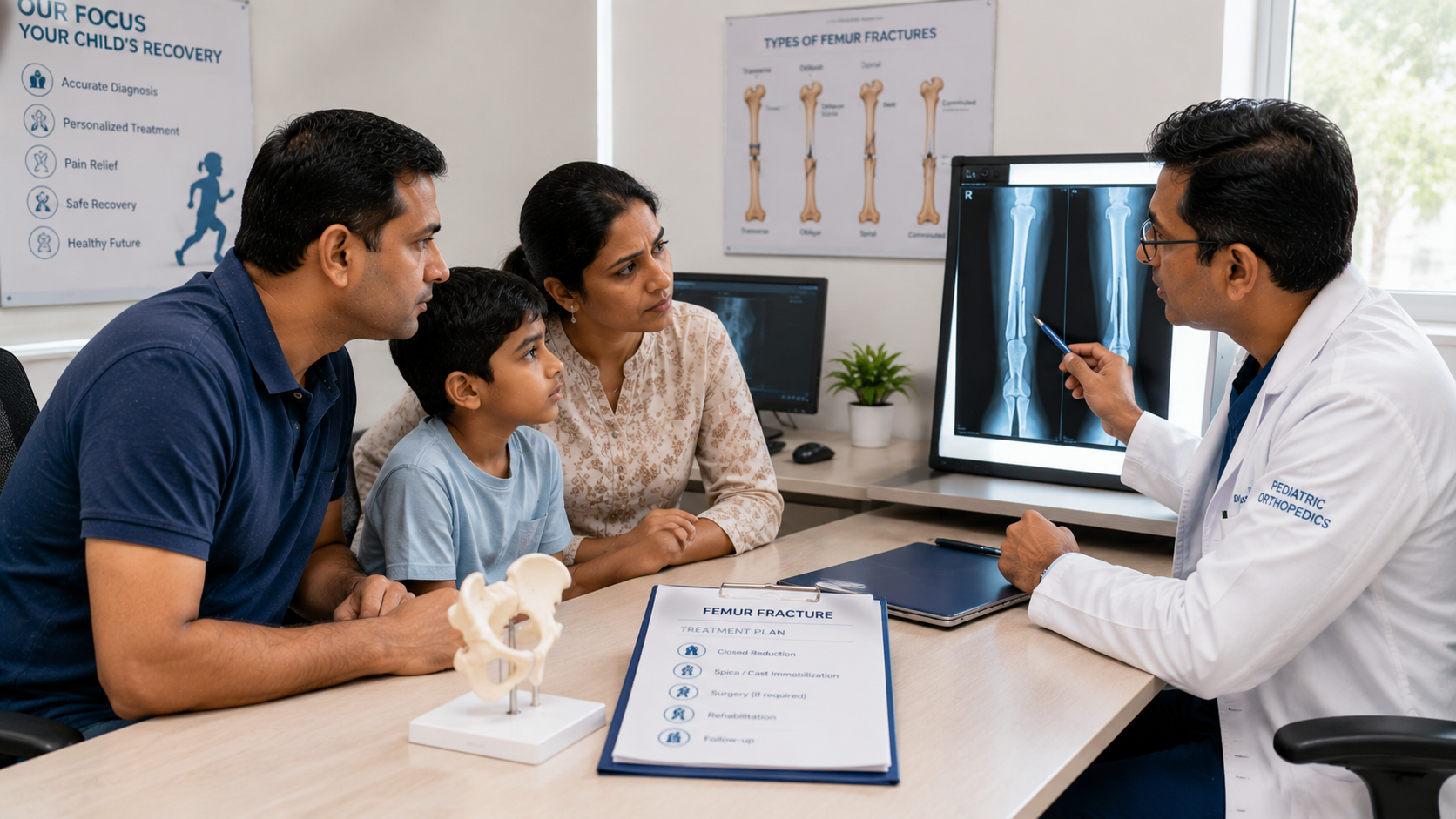
Treatment is not determined by age alone. Doctors consider the child’s age, weight, bone growth remaining, fracture location, fracture stability, degree of displacement, and associated injuries.
Broadly, the two main options are:
Younger children are more commonly treated with a spica cast because their bones have strong healing and remodeling potential. School-age children and adolescents are more likely to require surgery, particularly when alignment cannot be maintained safely in a cast.
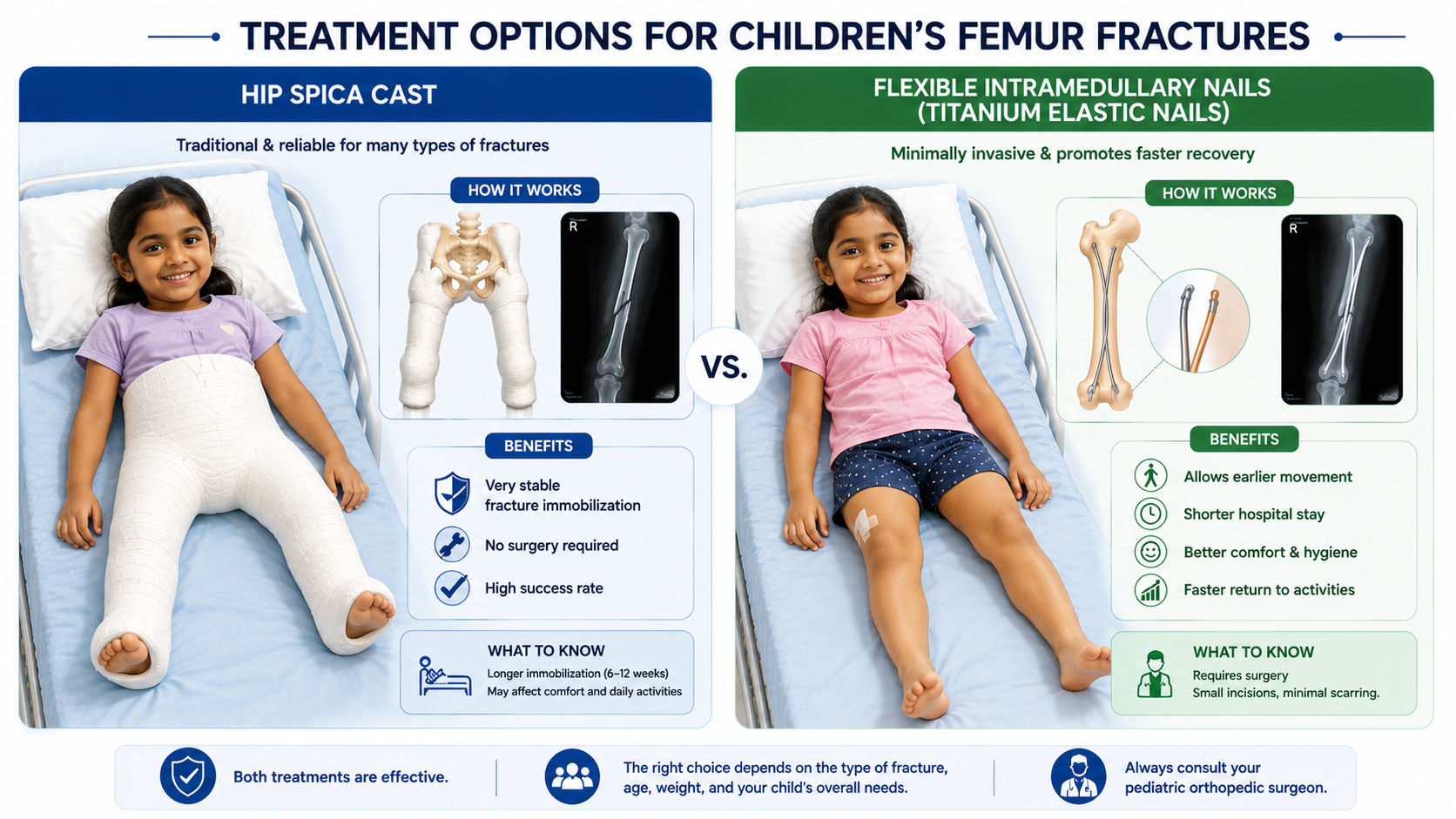
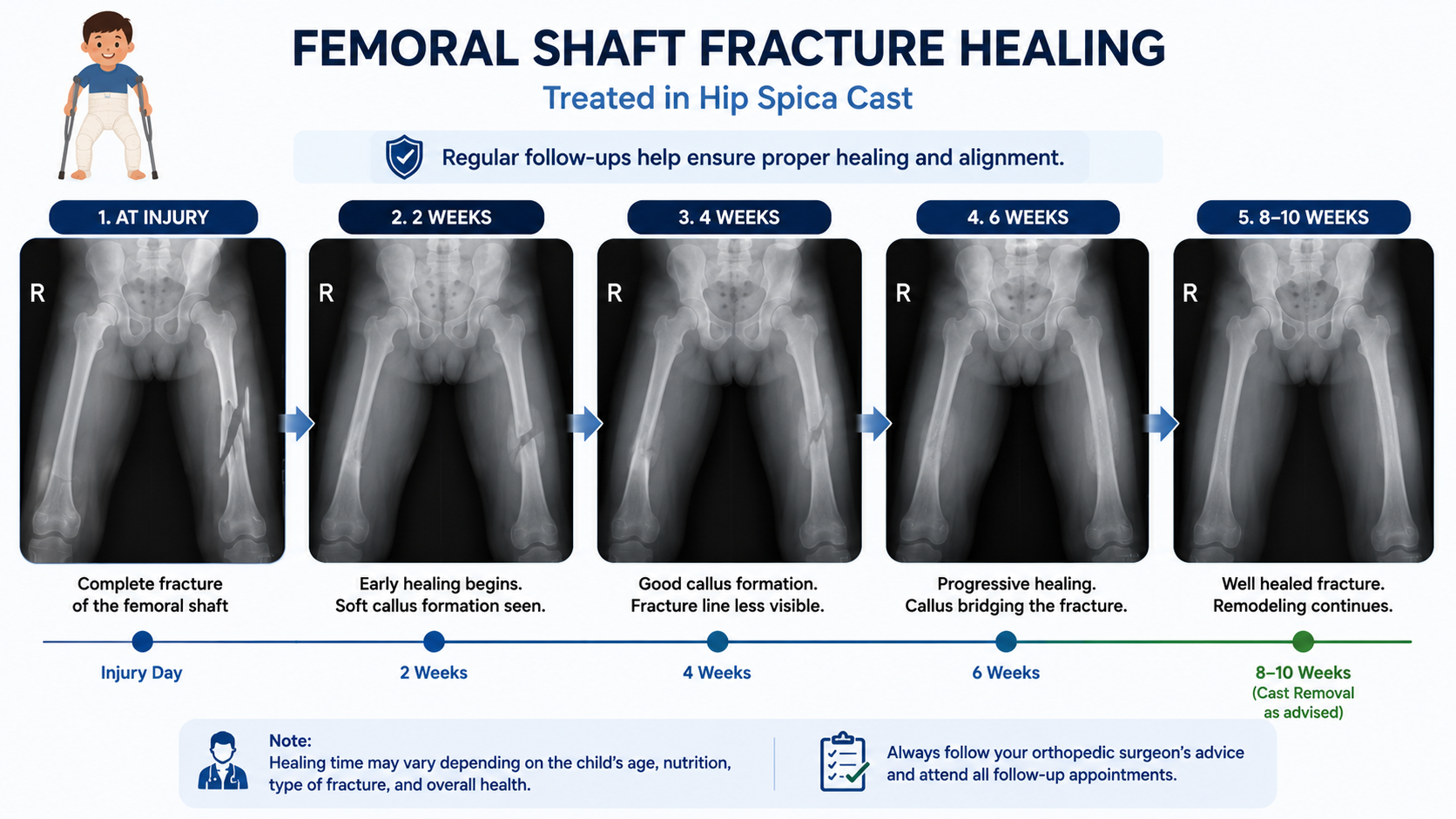
A hip spica is a large cast that covers part of the child’s abdomen, hips, and injured leg. Depending on the fracture, it may also extend partially or fully down the other leg.
The cast keeps the hip and thigh still while the broken femur heals. It may be applied after the bone is gently realigned under sedation or anesthesia.
A spica cast is commonly used for infants, toddlers, and selected younger children with an appropriate femoral shaft fracture.
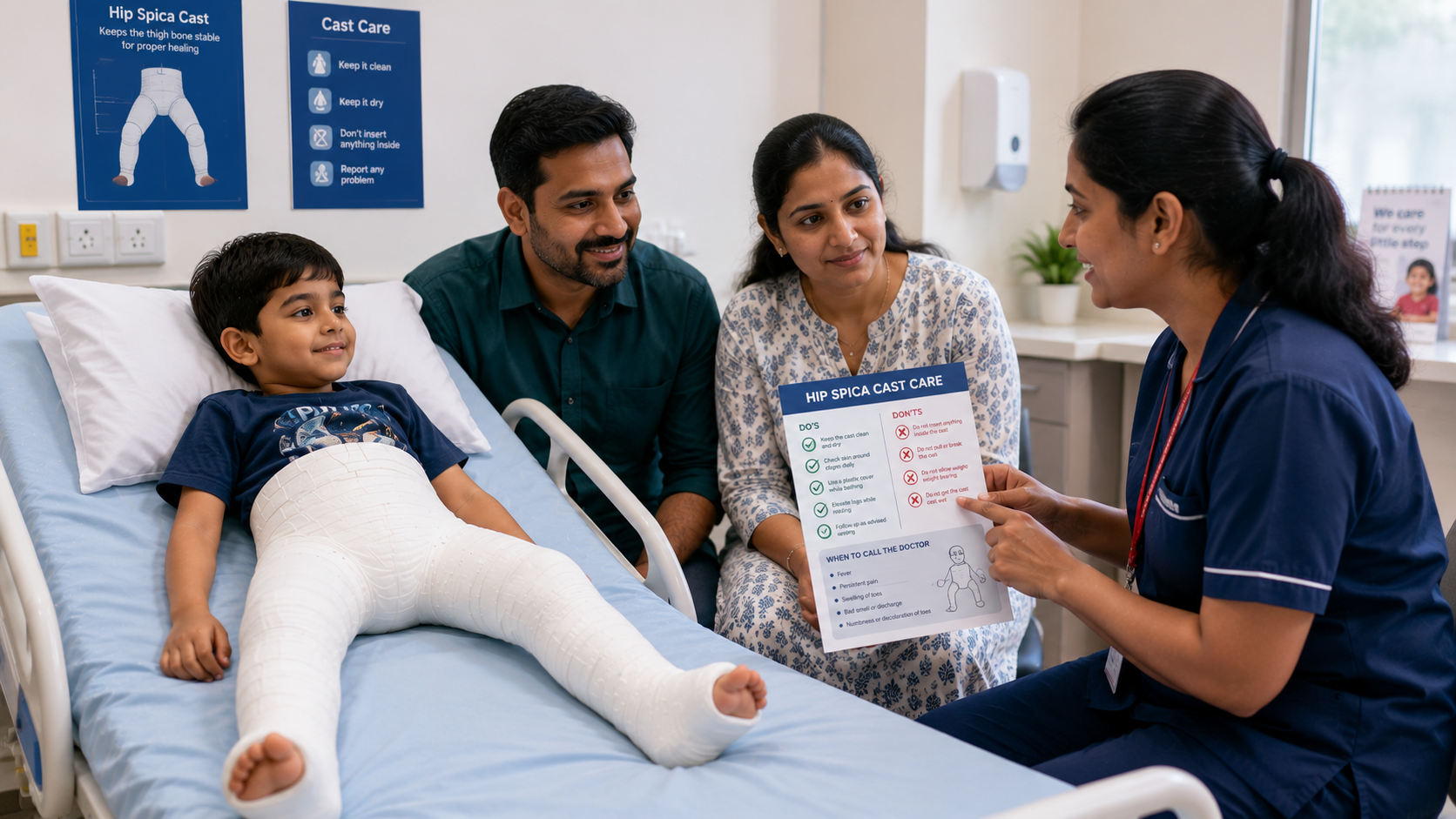
Spica casting is most often considered when:
Spica casting remains a common treatment for femoral shaft fractures in children younger than approximately five years, but the final decision is individualized.
Potential benefits include:
However, successful cast treatment requires careful follow-up and significant support from caregivers at home.
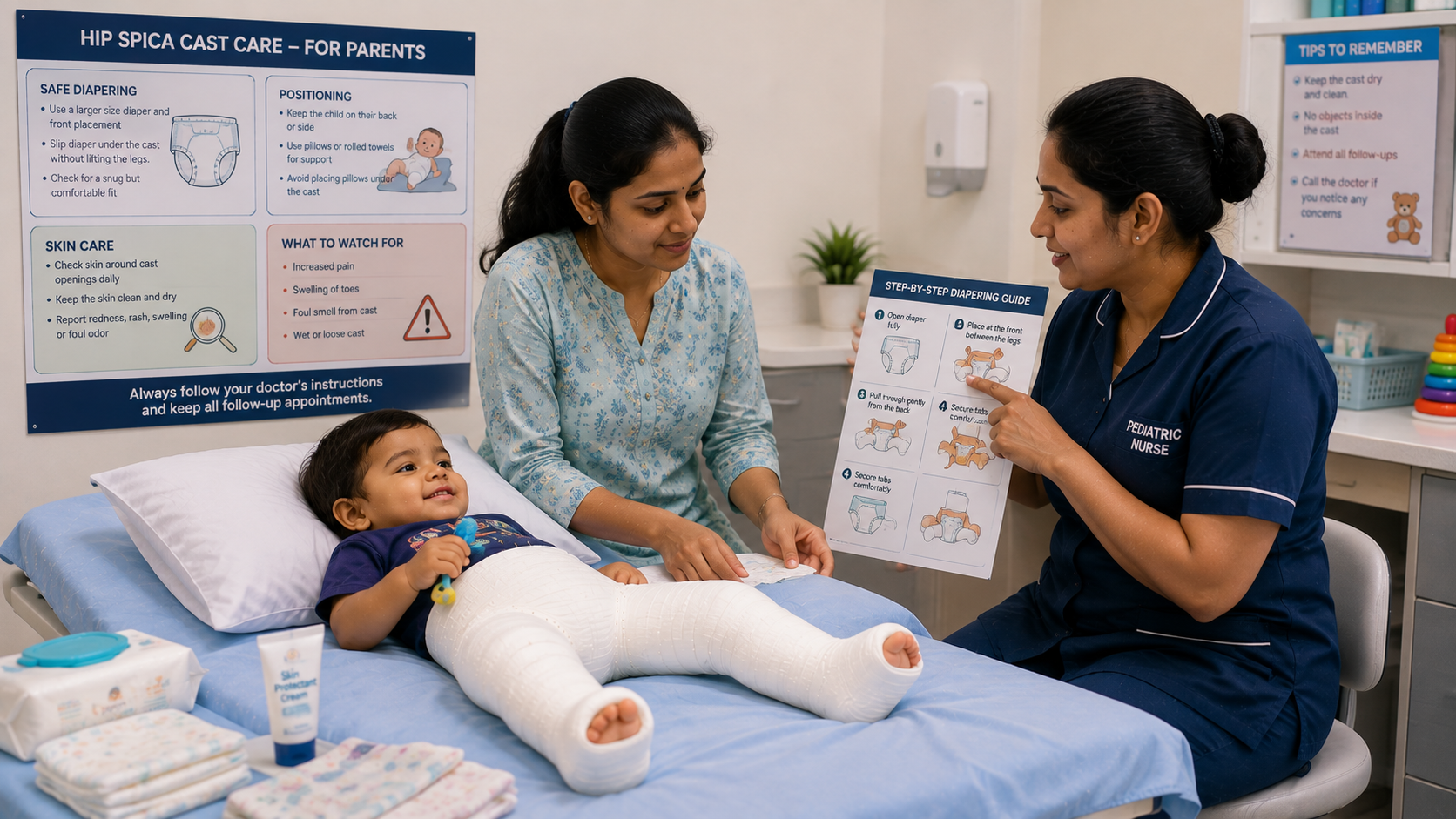
Daily life with a spica cast can initially feel difficult. Parents may need to adjust:
The cast must remain clean and dry unless the medical team confirms that it is waterproof. Food, toys, powder, or small objects should never be placed inside it.
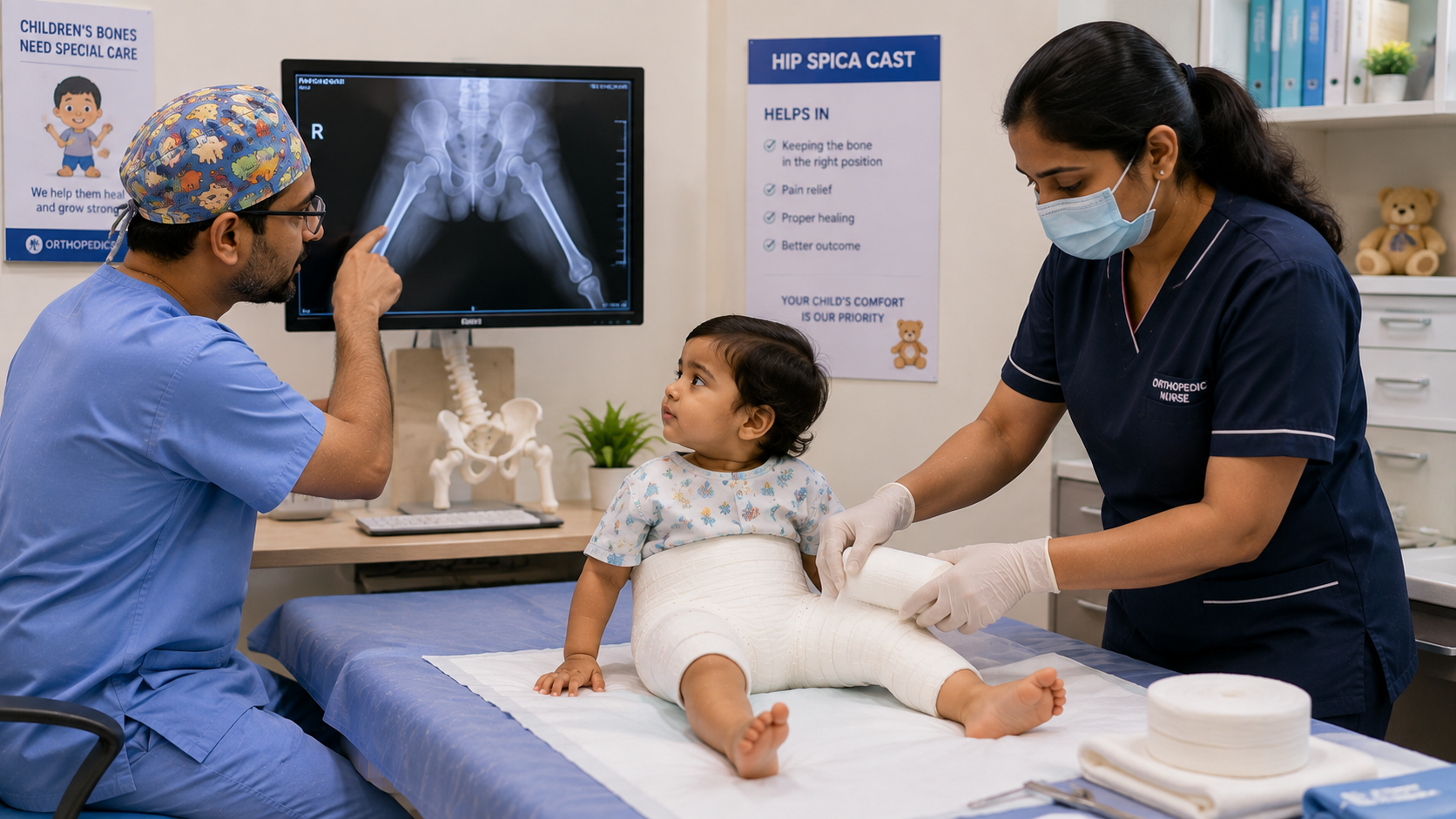
The duration depends on the child’s age, fracture pattern, and X-ray evidence of healing. Many femoral shaft fractures in young children require several weeks of immobilization.
The orthopedic team schedules regular X-rays to confirm that the fracture remains properly aligned and is forming new bones.
Parents should not remove, trim, soften, or adjust the cast at home.
Surgery may be considered when:
School-age children are more commonly treated surgically than infants and toddlers. Adolescents often need stronger fixation because of their size, bone maturity, and the forces placed on the femur.
The surgical method depends on the child’s age, weight, growth plates, and fracture characteristics.
Flexible intramedullary nails
Flexible nails are inserted inside the femur to hold the bone in alignment. They are commonly used for suitable fractures in school-age children who still have substantial growth remaining.
Plate and screw fixation
A plate is positioned along the femur and secured with screws. This may be used for unstable fractures, fractures at certain locations, or children for whom flexible nails are unsuitable.
Rigid intramedullary nail
Selected older adolescents may be treated with a stronger nail placed inside the femur. The entry point must be chosen carefully to protect the growing bone and blood supply.
External fixation
Pins are placed into the bone and connected to a frame outside the leg. This may be used for severe open fractures, major soft-tissue injuries, or complex trauma.
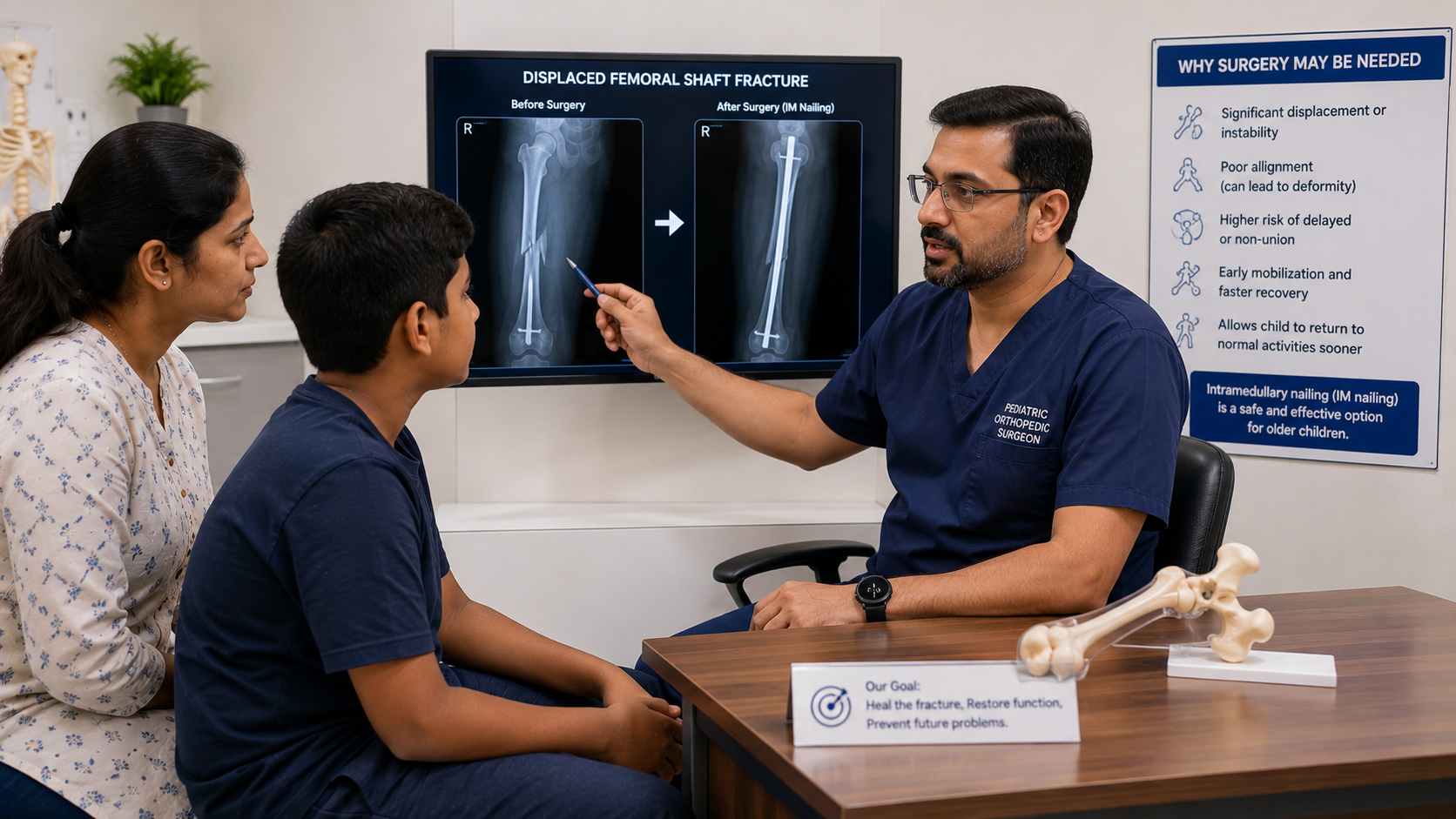
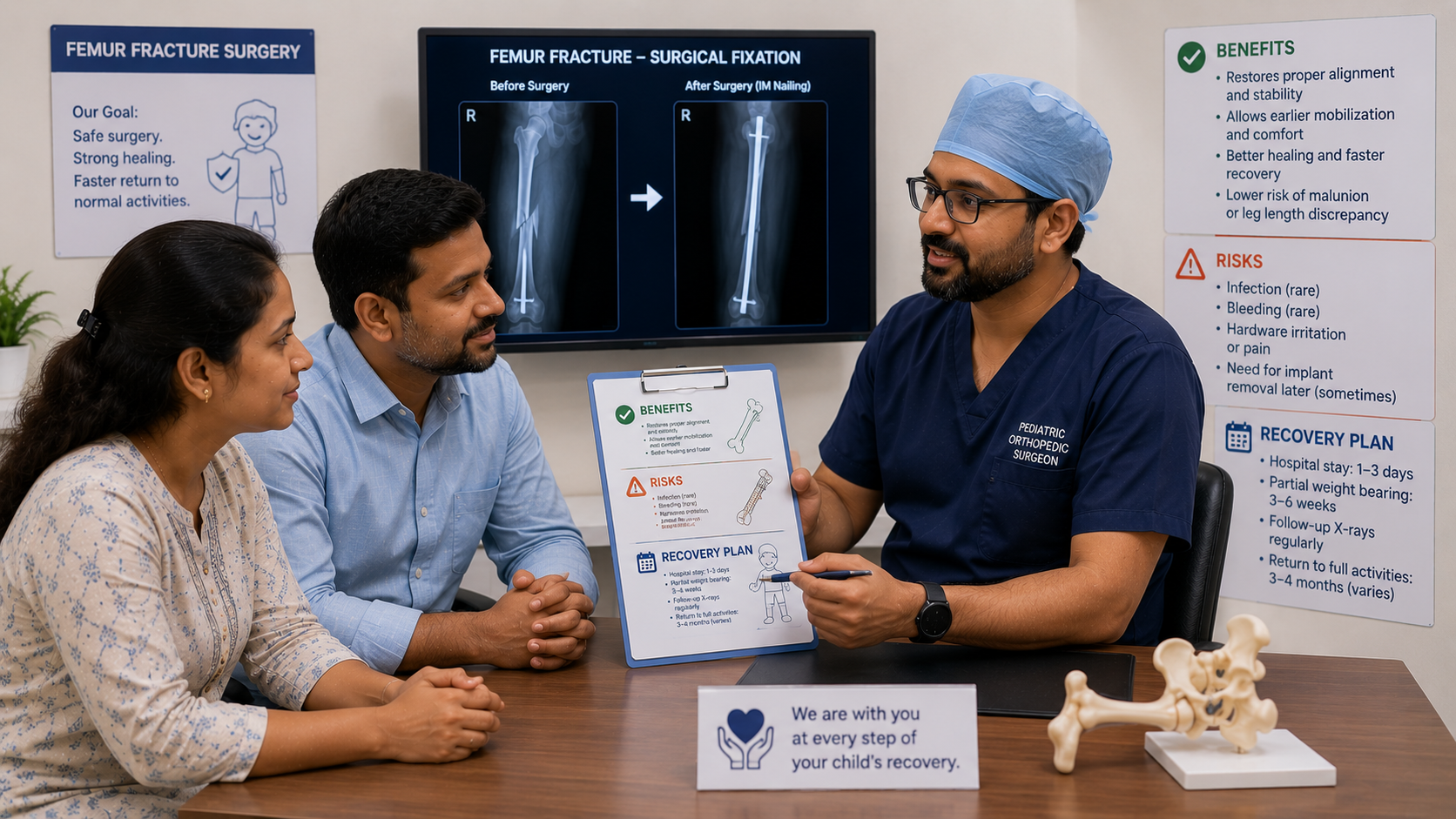
Depending on the injury, potential benefits may include:
Surgery does not always mean immediate full weight-bearing. Activity restrictions depend on the fixation method and fracture healing.
Possible risks include:
The surgeon will discuss risks based on the specific procedure and the child’s condition.
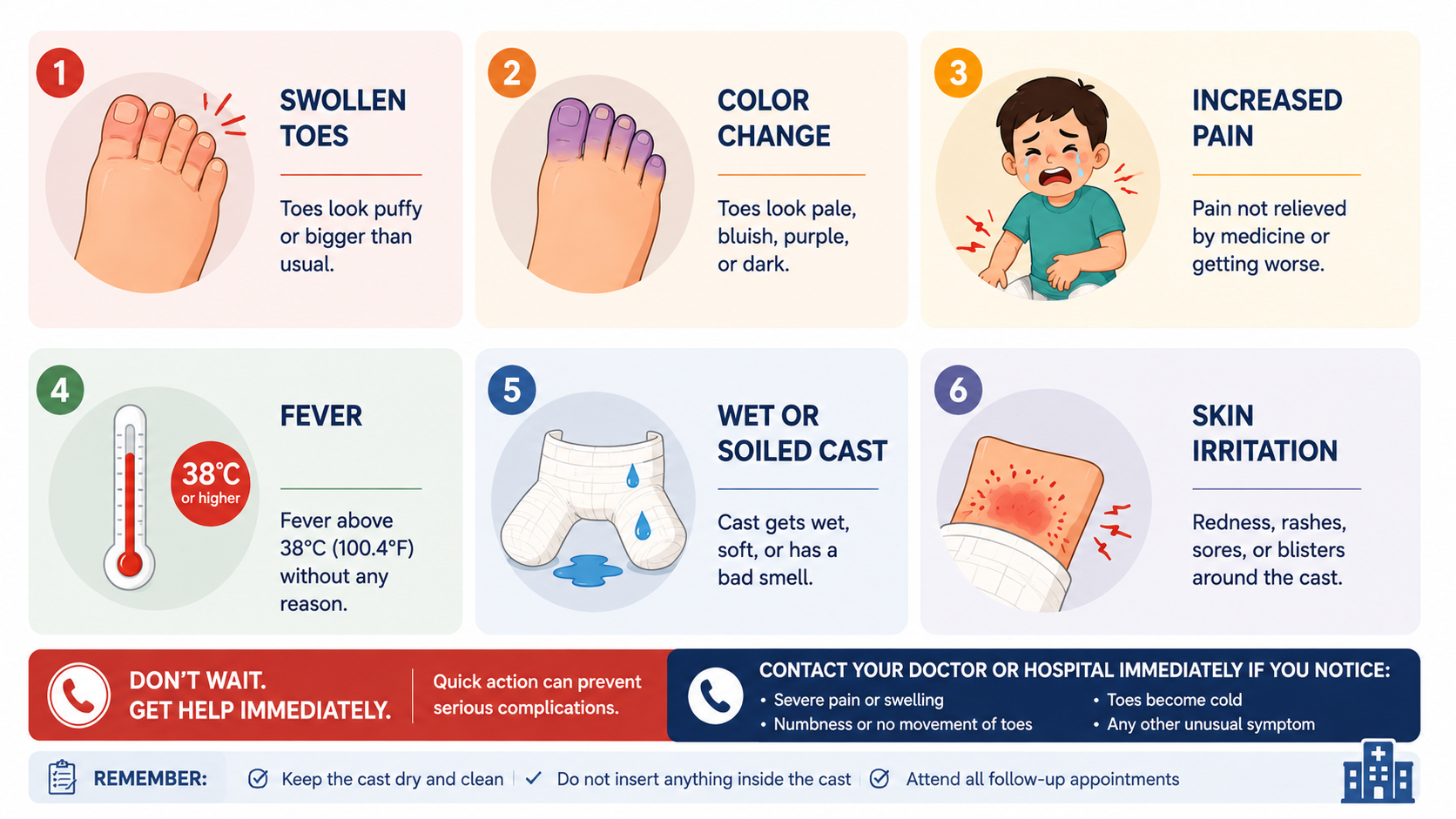
Contact the hospital immediately if the child has:
These symptoms may indicate circulation problems, infection, pressure injury, or another complication.
Neither treatment is universally better. Spica casting is often suitable for infants and younger children, while surgery may provide better stability for older children, heavier children, and complex or unstable fractures.
The child may need sedation or anesthesia so the doctor can safely align the bone and apply the cast without causing unnecessary pain.
Most children recover well and return to normal walking. Recovery depends on fracture severity, alignment, treatment, growth, and rehabilitation.
Not every child requires formal physiotherapy. Younger children often regain movement naturally, while older children or those with stiffness and weakness may benefit from a structured programmed.
Some implants remain in place, while others may be removed after the fracture has fully healed. The decision depends on implant type, symptoms, age, and the surgeon’s recommendation.
The schedule depends on the treatment and fracture pattern. Early X-rays may be needed to confirm that alignment is maintained, followed by additional imaging to assess healing.
Femur fractures in children are serious, but most heal successfully with appropriate treatment. A hip spica cast is commonly used for infants, toddlers, and selected younger children whose fractures can remain safely aligned without surgery.
Surgery may be more appropriate for older or heavier children, unstable fractures, open injuries, or cases where a cast cannot maintain acceptable alignment.
The best treatment is not based on one factor alone. A pediatric orthopedic specialist considers the child’s age, weight, fracture pattern, bone growth, overall health, and family’s ability to manage recovery safely.
Prompt treatment, careful home care, regular X-rays, and timely follow-up can help the child regain healthy movement and return safely to everyday activities.
Looking for a reliable Pediatric Orthopedic Specialist in Belagavi?
Dr Aravind Hampannavar
MS Ortho, DNB Ortho
Fellowship in Pediatric Orthopedics (Mumbai)
Fellowship in Advanced Trauma (Hongkong)
Consultant Orthopedic a Specialist in Deformity Correction & Pediatric Orthopedic Problems
Consult Now at Unicare Hospital, Belagavi
Unicare Hospital is dedicated to pediatric orthopedic care through trusted expertise and compassionate service.
Visit: www.unicarehospital.com
Call: 8088 814705
WhatsApp: +91 83131 00119
Address: Shahpur, Belagavi
